
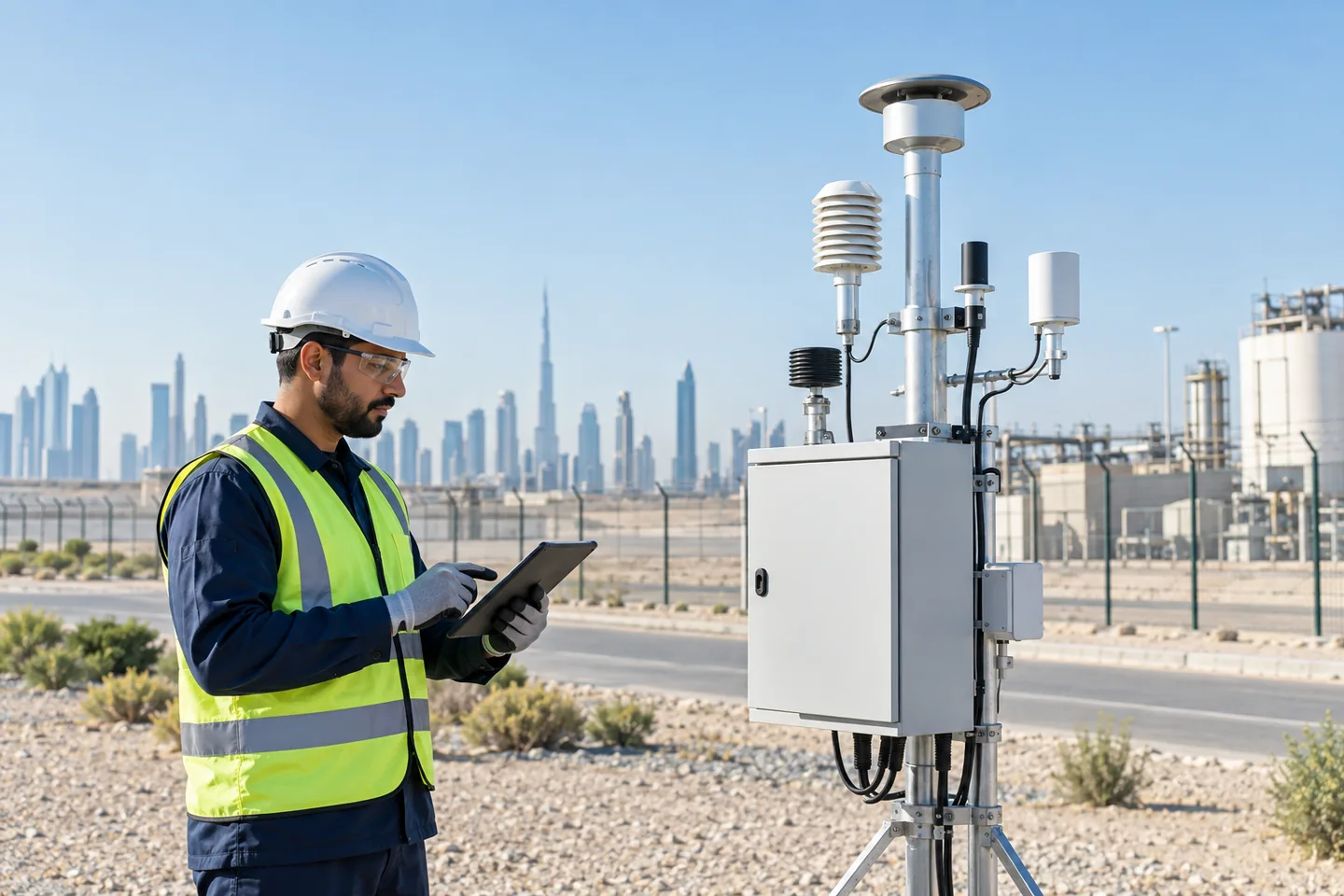
Air Quality Monitoring
Measures ambient and source-related air pollutants to establish baselines, track operational impacts and identify exceedances or emerging trends. Programmes may combine continuous stations, portable instruments, passive sampling, meteorological observations and—where the scope requires it—continuous emissions monitoring systems.
Monitoring focus
Approach: Define representative upwind, downwind and receptor locations; establish averaging periods and data-quality objectives; maintain calibration, validation and exception reporting records.
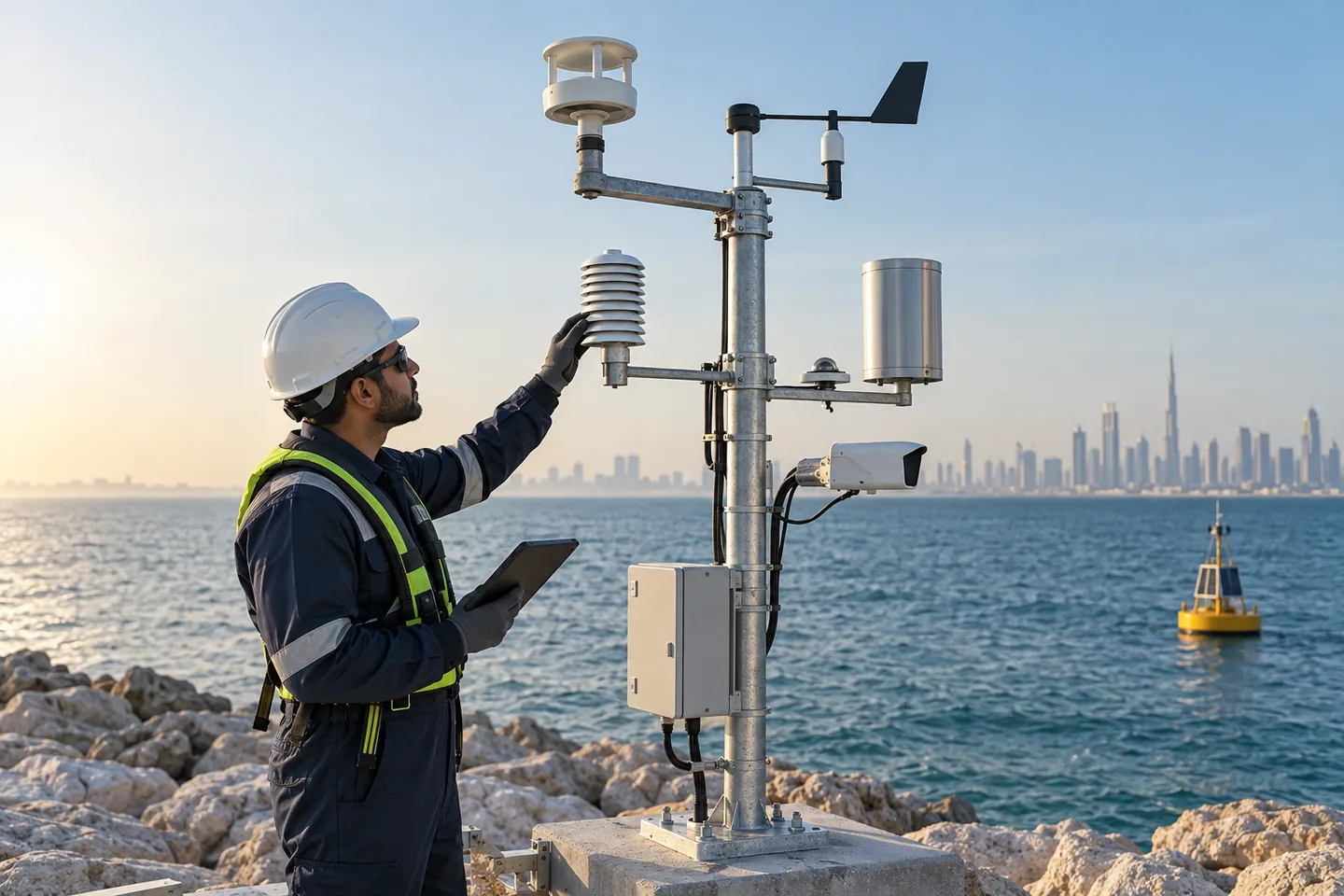
Meteorological Monitoring
Systematically measures and records atmospheric conditions through connected instruments and monitoring networks. Automatic weather stations provide continuous ground observations, while marine buoys and offshore stations extend coverage to waves, sea-surface temperature and winds over water.
Monitoring focus
Approach: Select a representative, unobstructed site and appropriate sensor heights; configure automatic weather station, marine or offshore instrumentation for secure telemetry; maintain calibration, uptime and quality-control records; and relate weather conditions to environmental and operational events.
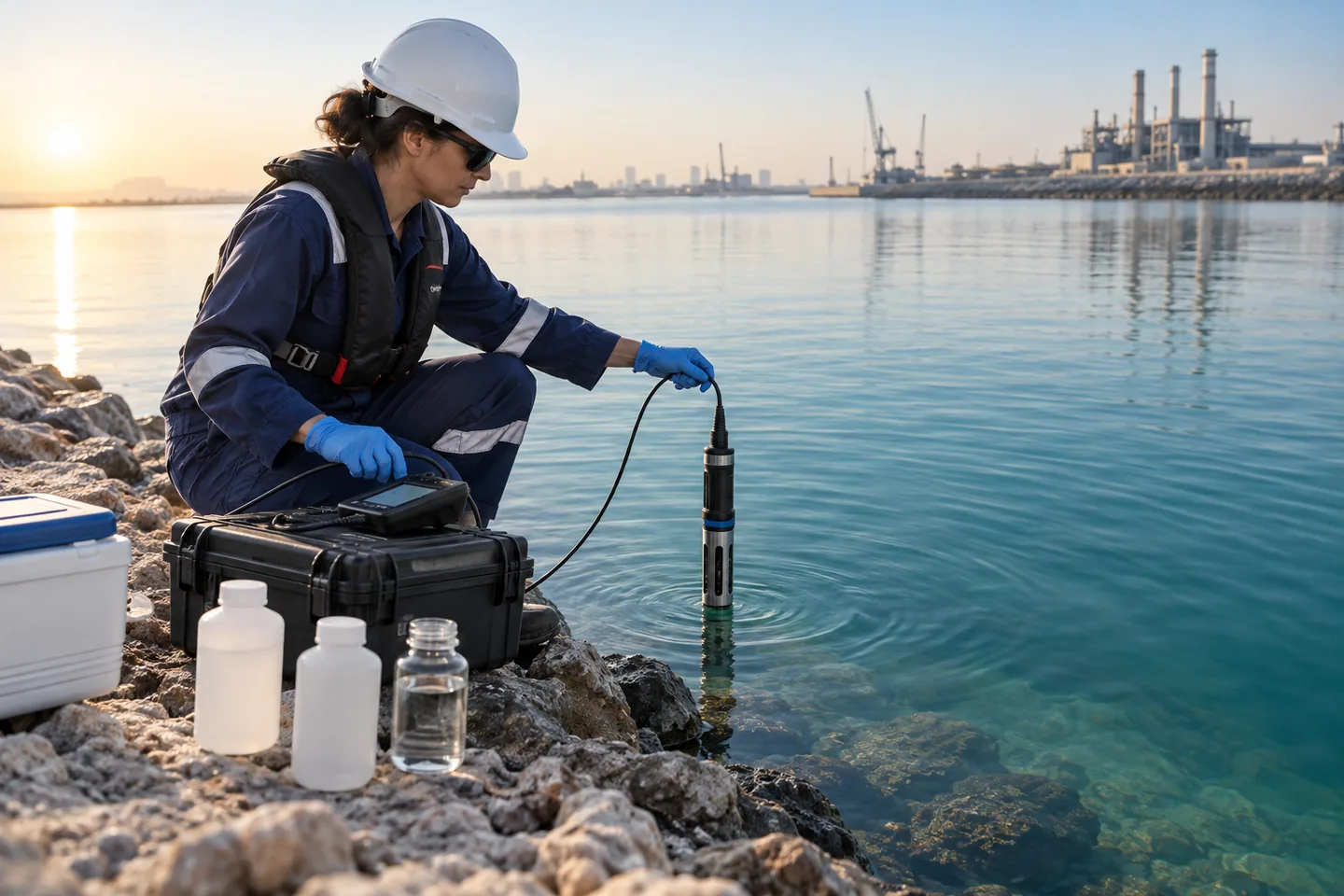
Water Quality Monitoring
Evaluates physical, chemical and biological conditions in surface water, groundwater, coastal water and industrial discharges. Field measurements can be combined with accredited laboratory analysis to assess baseline condition, operational change and discharge performance.
Monitoring focus
Approach: Select stations, depths and timing to reflect flows, tides, seasons and discharge conditions; use appropriate preservation, chain of custody, blanks, duplicates and laboratory detection limits.
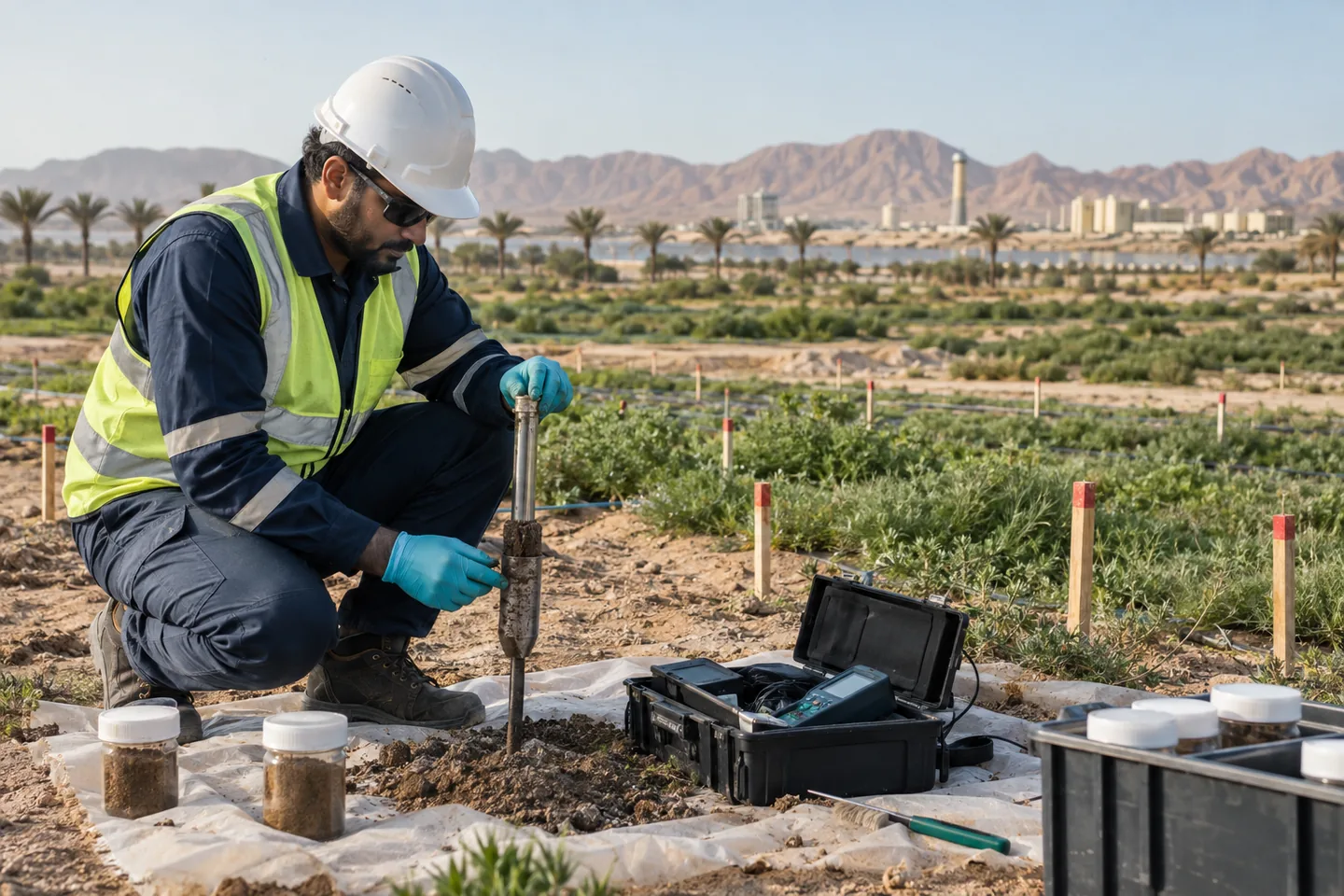
Soil Quality Monitoring
Assesses soil condition and change for agricultural land, natural habitats, construction areas and potentially contaminated sites. The scope may cover fertility and soil health as well as contaminants that affect people, ecosystems or future land use.
Monitoring focus
Approach: Develop a representative sampling grid or targeted investigation, record depth and field conditions, prevent cross-contamination and interpret results against the intended land use and relevant criteria.
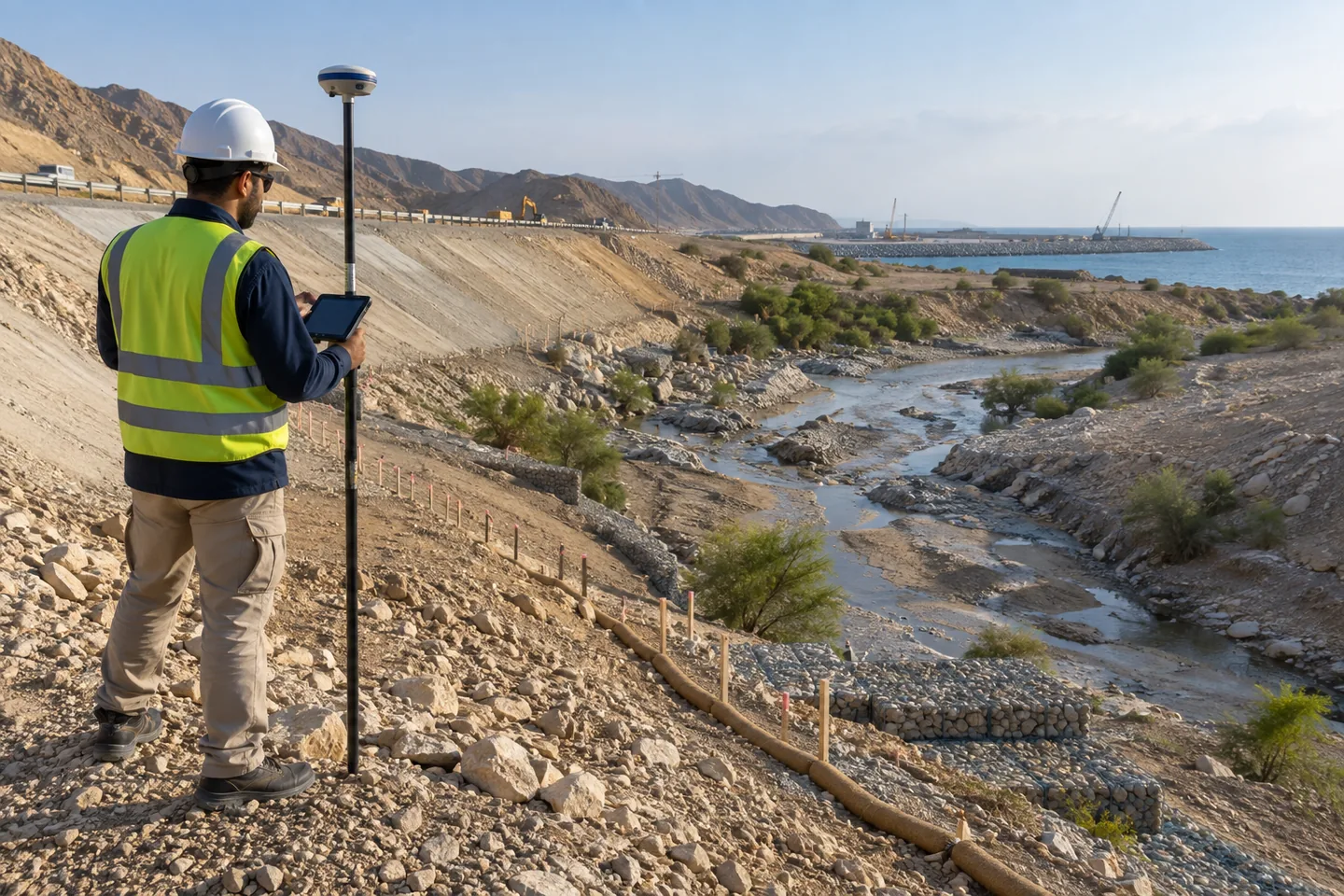
Erosion and Land Monitoring
Tracks topsoil loss, sediment movement, slope condition and terrain change caused by wind, runoff, earthworks or construction activities. Repeat observations help teams identify unstable areas and assess whether controls are working.
Monitoring focus
Approach: Combine fixed photo points, inspection records and repeat topographic or GNSS measurements; use remote sensing or drone data where suitable and permitted; report change against an agreed baseline.
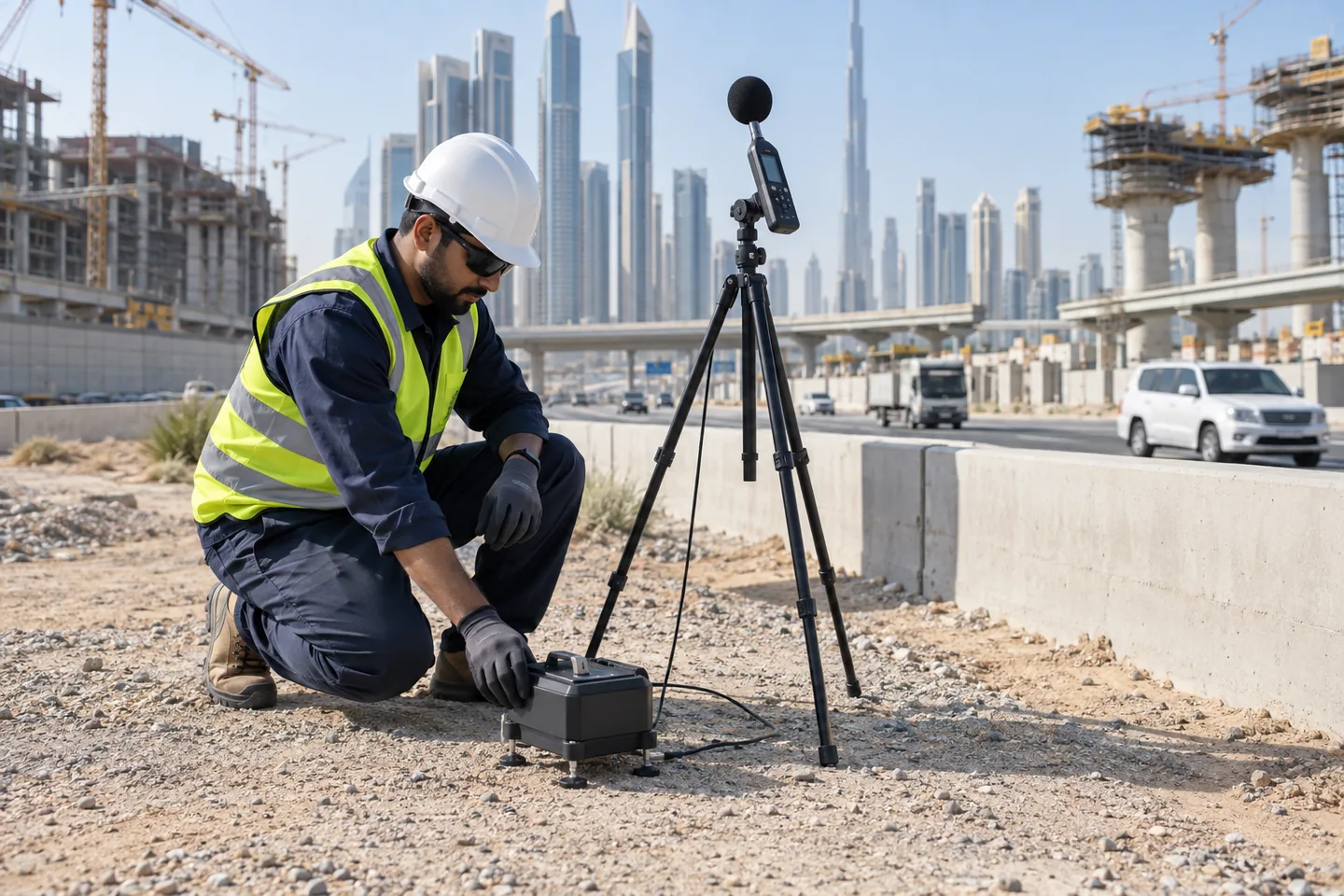
Noise and Acoustic Monitoring
Measures ambient noise and ground vibration around transport corridors, construction works, industrial sites and sensitive receptors. Short-term surveys and unattended continuous monitoring can be used to understand existing conditions and project influence.
Monitoring focus
Approach: Select representative receptor positions, use suitable calibrated instruments, document weather and operating conditions, correlate events with site activities and compare results with agreed criteria.
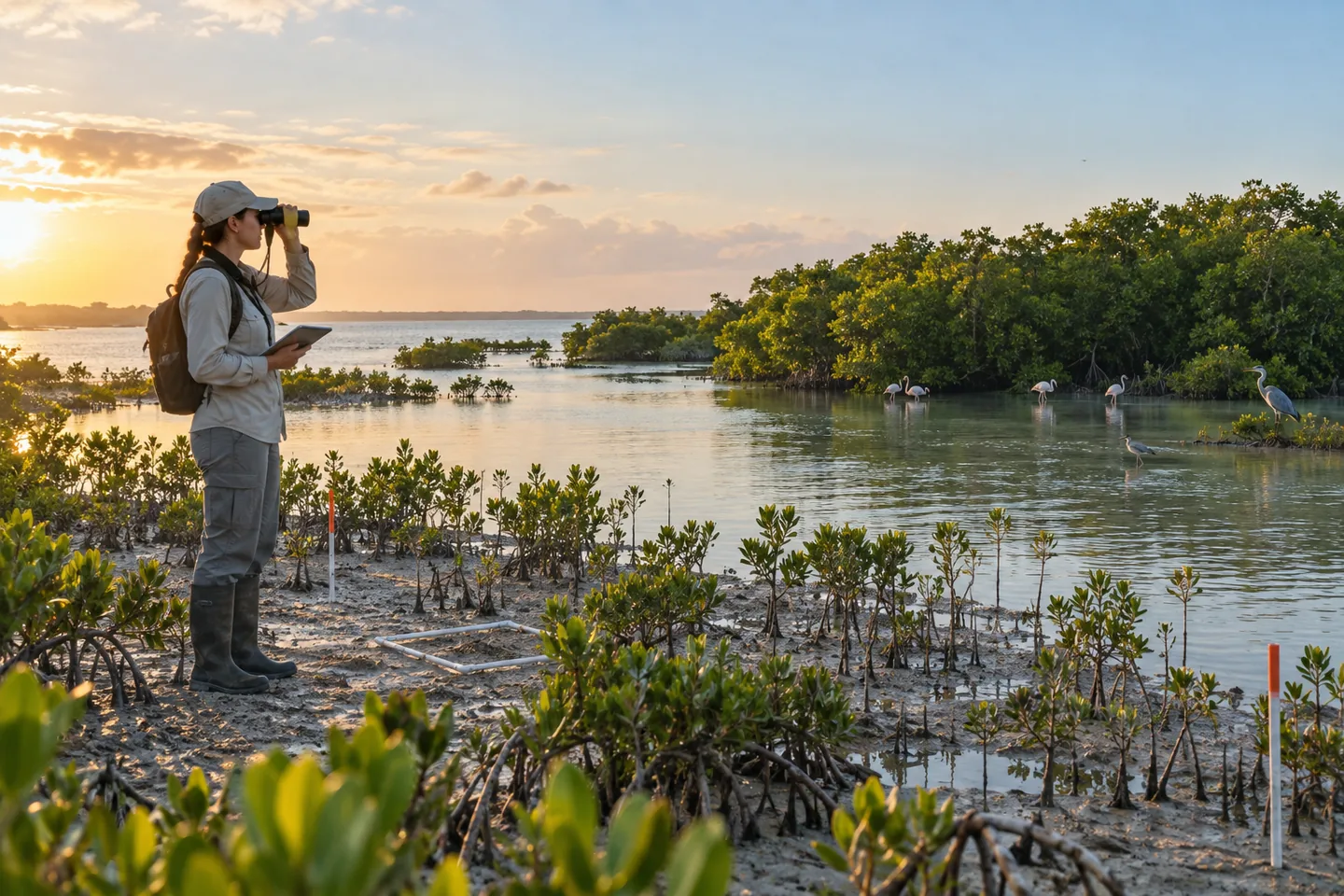
Biodiversity and Ecological Monitoring
Observes habitats, flora, fauna and—where relevant—microorganism or environmental-DNA indicators to identify seasonal patterns, habitat change, invasive species and signs of ecological decline or recovery.
Monitoring focus
Approach: Plan surveys around habitat, season and target species; use repeatable transects, quadrats, observation points or approved specialist methods; record effort and limitations for meaningful comparison.
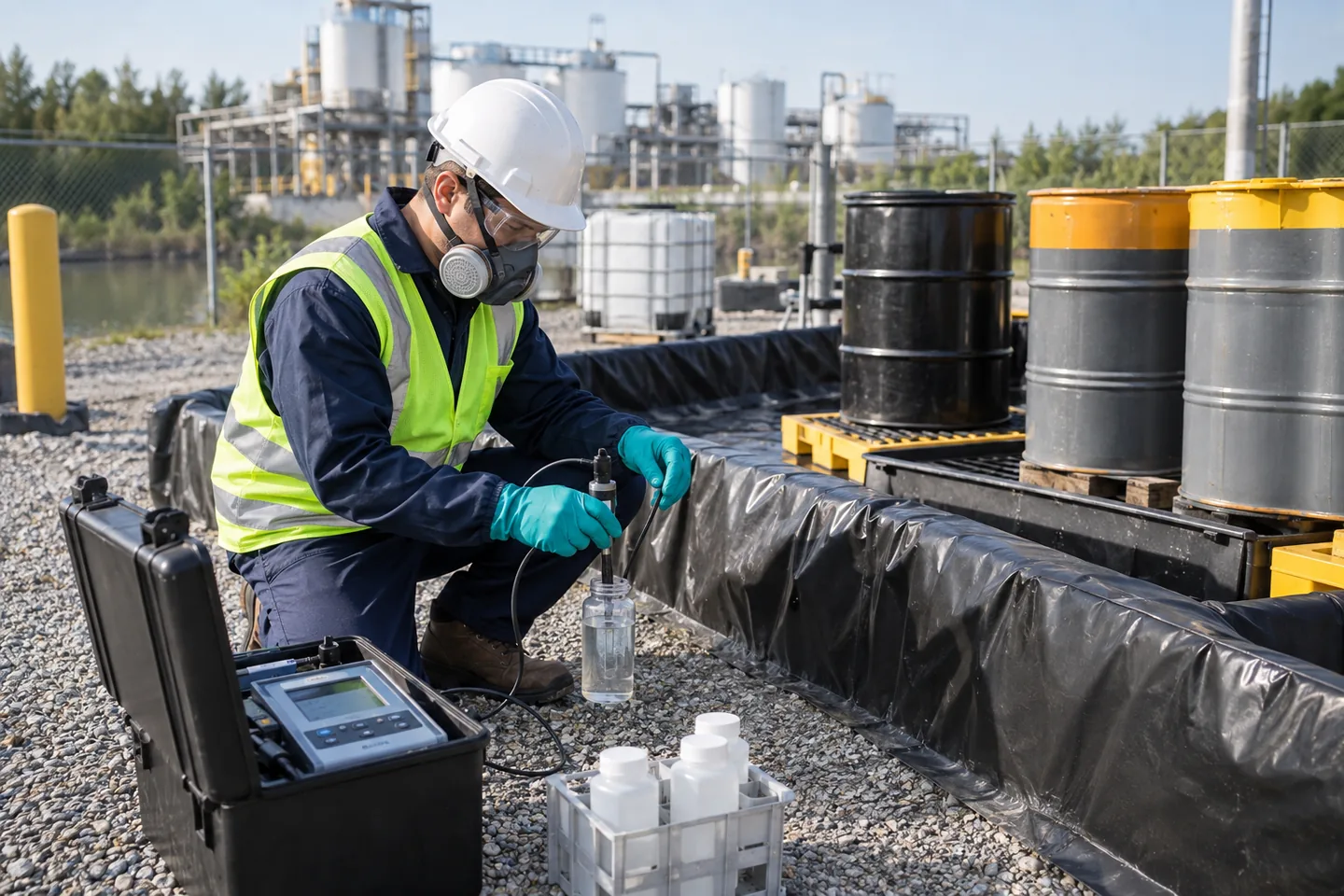
Contamination and Waste Monitoring
Screens and monitors hazardous substances and waste-related impacts across air, soil, sediment, surface water and groundwater pathways. The objective is to locate potential sources, understand migration and verify containment or corrective action.
Monitoring focus
Approach: Apply a source–pathway–receptor model, targeted sampling plan, strict health-and-safety controls and documented chain of custody. Radiological work requires appropriately authorised specialists and instruments.
Monitoring systems and support
- Baseline, operational and compliance monitoring plans
- Fixed onshore monitoring stations for industrial, urban, remote and sensitive-receptor locations
- Offshore monitoring buoy stations and fixed marine monitoring platforms
- Mobile monitoring stations for campaigns, temporary coverage and incident response
- Real-time web-based monitoring, analysis, mapping, alarms and notifications
- Customized monitoring stations with selected sensors, power systems, telemetry and protective enclosures
- Field measurements, automated sensor networks and laboratory coordination
- Calibration, validation, quality assurance, threshold and exception reporting
- Preventive maintenance, remote diagnostics and station performance tracking
- Environmental data management, dashboards and periodic reporting
Discuss Environmental Monitoring with SIAGIS
Share the location, intended use, target date and available background information.